
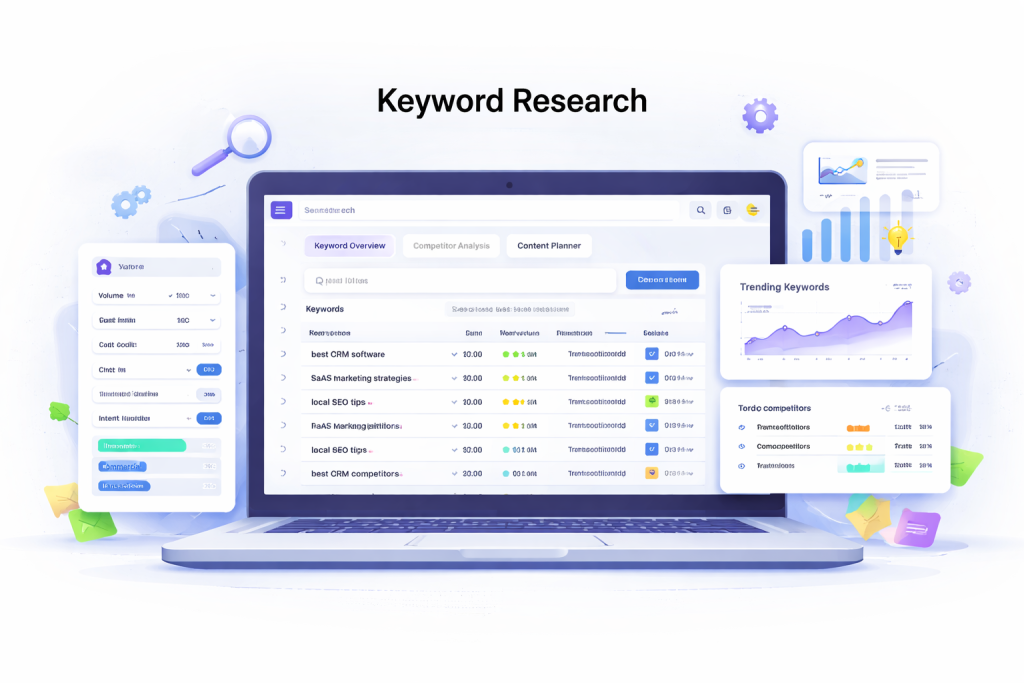
Here is a quick checklist before choosing a keyword research tool:
A strong keyword research platform should not just show you keywords. It should help you make better decisions about what to publish, what to prioritize, and how to compete more effectively. Let’s compare the major types of tools and how to find the best fit for your business.
- Know whether you need content planning, local SEO research, competitor analysis, or all three.
- Check if the tool is easy enough for your current workflow.
- Look beyond search volume and review keyword intent and business relevance.
- Choose a tool that helps you turn research into an actual content strategy.
Step 1: Understand Why the “Best” Tool Depends on Your Business
The phrase “best keyword research tool” sounds simple, but in reality it depends heavily on what your business is trying to achieve. A startup validating blog topics may need speed and simplicity. An SEO agency may need detailed competitor data, tracking, and export flexibility. A local business may care more about location-based opportunities than global search volume. That is why comparing tools only by brand name or overall popularity leads to poor decisions. A platform can be powerful and still be the wrong fit for your team. If it is too complex, too expensive, or too disconnected from your actual goals, it will not improve your SEO workflow in a meaningful way. Before comparing features, define your use case clearly. Are you trying to build topic clusters? Find low-competition opportunities? Expand product pages? Improve blog performance? Analyze competitors? Your main use case should guide the comparison more than any marketing page or online review. Once you know what you need from the tool, everything else becomes easier to evaluate. Metrics make more sense, interfaces feel less confusing, and pricing becomes easier to judge against real value.Ask yourself: Do I need more keyword data, or do I need a better way to turn keyword data into content decisions?That question can save a lot of money and frustration, because many businesses already have access to data. What they really need is a tool that helps them use that data better.
Step 2: Compare the Core Features That Actually Matter
Not all keyword research tools prioritize the same things. Some are designed around raw keyword discovery. Others are stronger in competitor analysis, SERP breakdowns, trend discovery, clustering, or content workflow support. That is why feature comparison should focus on what directly improves your business decisions. The first feature most people notice is search volume, but volume alone is not enough. A useful tool should also help you understand keyword difficulty, ranking intent, SERP behavior, and how closely a keyword aligns with what your business offers. Otherwise, you risk chasing traffic that looks impressive but does not convert. Another major factor is competitor visibility. Some tools are much better at showing which keywords your competitors rank for, which pages bring them traffic, and where content gaps exist. This is especially important for businesses entering competitive markets, because researching in isolation often leads to weaker content strategy. Workflow matters too. If your tool makes it hard to organize keywords into clusters, group by intent, or move research into content planning, then the research stage becomes disconnected from execution. A good tool should make it easier to move from discovery to publishing, not just generate long spreadsheets of terms.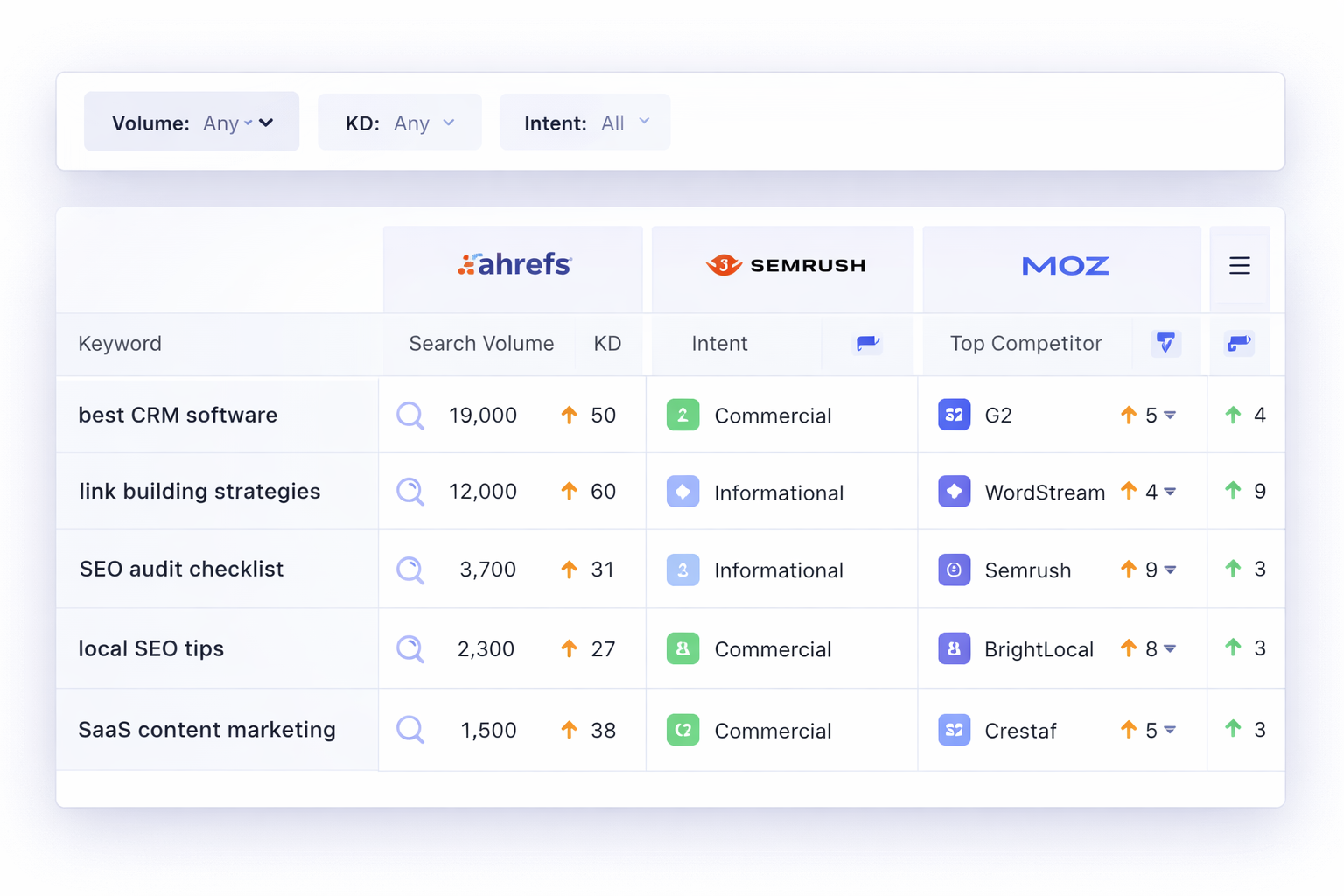
Step 3: Match Tool Types to Business Scenarios
One useful way to compare keyword research tools is by the type of business scenario they support best. Some tools are ideal for beginners because they simplify discovery and surface practical suggestions quickly. Others are better for advanced teams that need deeper competitor analysis, broad datasets, and more precise filtering. For small businesses or founders, the best fit is often a tool that is easy to use and good at finding commercially relevant opportunities without overwhelming the user. A simple interface, clear keyword suggestions, and quick opportunity scanning can be more valuable than enterprise-level reporting. For content-heavy businesses, the priority may shift toward clustering, topic expansion, intent grouping, and competitor-based research. These teams usually benefit from tools that support editorial planning, help identify supporting article ideas, and make it easier to build content systems around target topics. Agencies and larger SEO teams often need more flexibility. They may compare multiple domains, export large datasets, review SERP changes, and analyze rankings across many clients or business units. In these cases, advanced reporting and broader research depth become far more important. The goal is not to force every company into the same “top tools” list. The goal is to understand which tool supports the pace, skill level, and decision-making style of your business best.
Here are some practical business-fit questions:
A tool that fits your operating style will almost always create more SEO progress than a more famous tool that your team barely uses properly.
- Is this tool usable by one person, or does it require a dedicated SEO specialist?
- Does it support local, national, or international research needs?
- Can it help move from keyword discovery to content planning quickly?
- Does the pricing make sense for the value your business will realistically use?
Step 4: Look Beyond Keywords and Evaluate Content Planning Value
Keyword research should not end with a list of phrases. The real value comes from turning those keywords into pages, clusters, landing pages, articles, and content priorities that support business growth. That is why the best keyword tool is often the one that helps connect research to action. Some tools are better at surfacing related questions, semantic variations, and subtopics that help shape a full article or topic cluster. This is especially useful for businesses that rely on content marketing, because publishing isolated keywords rarely produces the strongest SEO results. You also want to evaluate whether the platform helps you separate informational intent from transactional intent. A keyword may look attractive on paper, but if it does not match the type of page you want to create, it may not deserve priority. Good keyword research tools help reduce this mismatch by giving better context around what users actually want. Another benefit is prioritization. Businesses often discover hundreds of possible keywords, but the winning strategy usually comes from choosing the right few first. Tools that help surface easier wins, stronger business relevance, or better topical coverage can make your SEO planning much more focused and sustainable.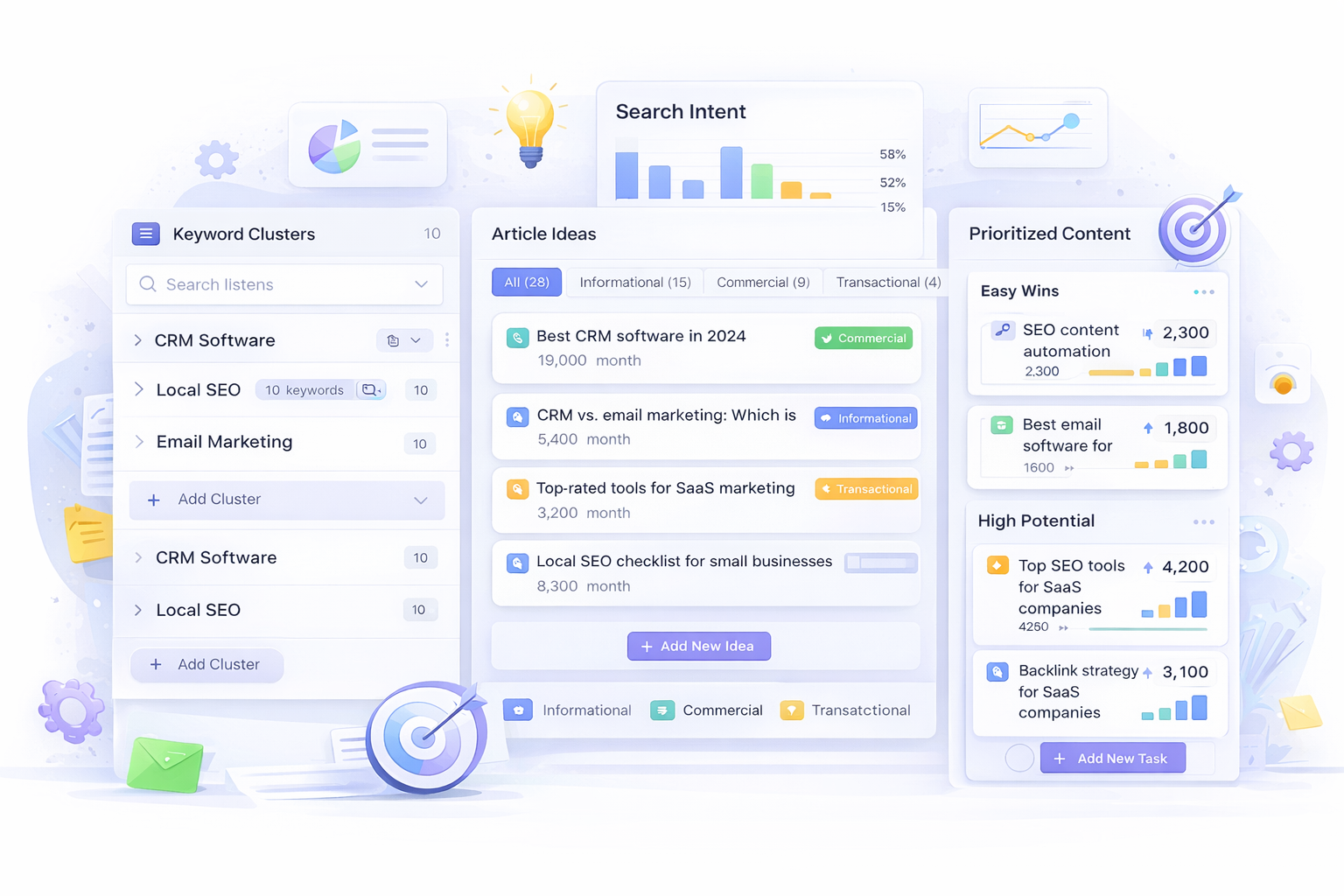
Step 5: Compare Budget, Team Capacity, and Long-Term Value
Pricing plays a bigger role than many businesses want to admit. Some keyword research platforms are affordable and focused. Others are broad SEO suites with much higher costs. The right choice depends not only on what you can pay, but on what your team can actually extract from the subscription. A cheaper tool is not automatically better, and an expensive one is not automatically more valuable. If your business only needs content topic discovery and basic keyword analysis, a simpler platform may provide excellent value. But if your strategy depends on competitor tracking, domain-level analysis, and large-scale keyword segmentation, a broader suite may save time and increase output enough to justify the investment. Team capacity matters as well. A platform with advanced reporting is only useful if someone on the team can interpret and act on the data. For many businesses, the best fit is a tool that balances depth with usability, allowing research to happen consistently rather than occasionally. The most important question is whether the tool supports long-term growth. Will it still make sense as your content library grows? Can it support more advanced planning later? Does it fit into your publishing workflow rather than sitting as a separate unused dashboard?| Comparison Area | What to Check | Why It Matters |
|---|---|---|
| Ease of use | How quickly your team can get value from the platform | Improves consistency and reduces wasted subscription cost |
| Keyword data quality | Volume, intent, difficulty, and related topic insights | Supports smarter SEO targeting |
| Competitor research | Visibility into rankings, gaps, and top pages | Helps build stronger content and positioning |
| Content planning support | Topic grouping, clustering, and prioritization | Turns research into execution |
| Pricing fit | Whether the tool matches your actual business stage | Prevents overspending on unused features |