

Here is a quick checklist before choosing between autopublishing and manual posting:
For SEO, publishing is not just an admin task. It affects freshness, consistency, content velocity, internal linking, and how quickly your site expands its topical authority. Let’s compare autopublishing and manual posting properly to see which one actually wins for SEO.
- Consider how much content your business needs to publish each month.
- Review whether your current workflow causes delays or inconsistency.
- Check if content quality can still be protected within an automated process.
- Think about whether publishing speed directly affects your SEO momentum.
Step 1: Understand Why Publishing Method Affects SEO Performance
Many people think SEO success depends only on what is written in the article, but the publishing process also matters more than it first appears. If content sits in drafts for too long, cluster plans break down, publishing schedules become inconsistent, and SEO campaigns lose momentum. A strong article that goes live too late may still underperform compared with a good article that is published consistently within a broader strategy. Publishing method affects more than timing. It also influences how easily your team can maintain internal linking, metadata, image placement, structured article rollouts, and content freshness. In other words, publishing is part of execution quality, not just an administrative final step. For example, if manual posting causes a backlog, your keyword plans may become disconnected from actual output. But if autopublishing sends unfinished or poorly reviewed content live, that can create a different kind of SEO problem. The best process is the one that keeps quality high while allowing your content system to move at the right speed. That is why this decision should be tied directly to your growth model. SEO gains usually come from consistency over time, and the publishing system plays a major role in whether that consistency is realistic.Ask yourself: Is your main SEO bottleneck content creation itself, or is it the delay between content being ready and content actually going live?That question often reveals whether manual posting is still serving your team properly or whether automation would remove a major operational bottleneck.
Step 2: Where AutoPublishing Wins for SEO
Autopublishing is powerful because it removes friction. Once content is prepared and approved in the right system, it can be pushed live consistently without requiring someone to manually handle every post. This is especially useful for businesses running high-volume content strategies, multi-page topic cluster builds, or frequent content refreshes. One of the biggest SEO benefits is consistency. Search-driven growth often improves when a site publishes on a steady schedule, especially in competitive niches where topical expansion matters. If manual posting causes missed days, delayed articles, or inconsistent rollout of supporting content, autopublishing can help keep the strategy moving. Automation can also reduce operational waste. Instead of spending time repeatedly copying content into a CMS, adjusting simple fields, and managing repetitive posting actions, teams can spend more time improving article quality, keyword targeting, internal links, and cluster planning. That shift often creates stronger SEO results than manual posting ever could. Another advantage is scale. When businesses want to grow through content systems instead of isolated articles, autopublishing makes the workflow more realistic. It becomes easier to maintain content cadence, expand supporting pages, and execute larger plans without constantly waiting on manual posting tasks.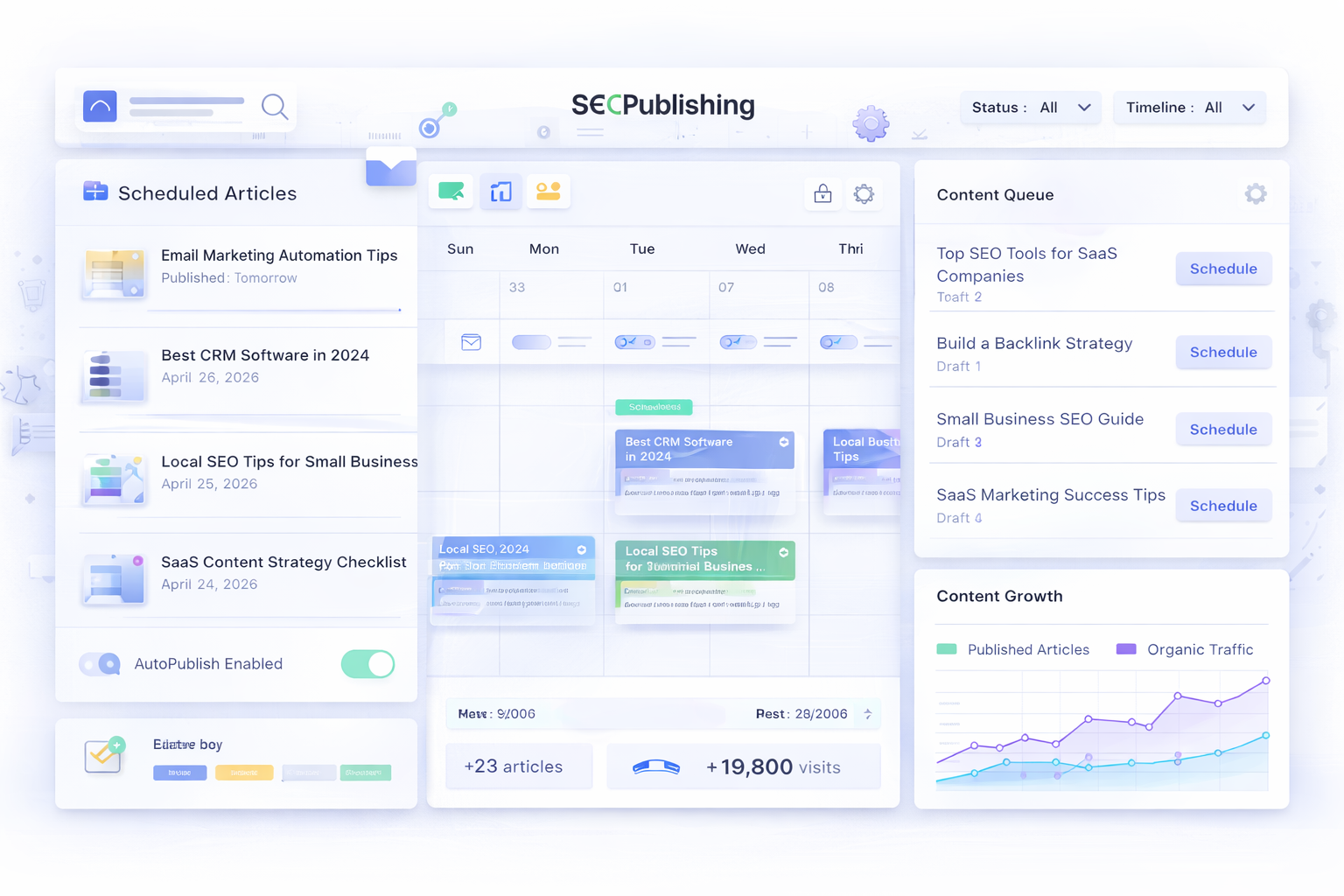
Step 3: Where Manual Posting Still Has an Advantage
Manual posting remains valuable because it gives teams full control over how content appears at the final stage. This matters when formatting is complex, visual presentation needs close attention, or every article carries higher brand or editorial risk. A manual process can catch small issues that automation may miss, such as layout inconsistencies, missing embeds, broken formatting, or context-specific internal link opportunities. For lower-volume websites, this level of control can be worth the extra effort. If your business only publishes a limited number of articles each month, the operational savings from autopublishing may not be as important as the confidence that every post has been reviewed carefully before publication. Manual posting can also be useful when content requires last-minute judgment. Sometimes a team may want to adjust the title, swap a CTA, change a heading, add a relevant internal link, or improve image placement right before publishing. In these cases, manual handling gives more freedom and precision. This is especially true for flagship content, thought leadership pieces, landing pages, and articles with high reputational value. A business may not want these to move through a fully automated system unless the review workflow is already very mature. That said, manual posting only stays valuable when it does not become a bottleneck. Once the process starts slowing down publishing schedules or creating a draft backlog, its advantages begin to weaken from an SEO perspective.
Manual posting is often strongest when:
Manual control can protect quality, but only if the workflow is disciplined enough that content does not keep getting delayed.
- The business publishes low volume but high-stakes content.
- Each page needs close visual or editorial review before going live.
- The team frequently makes final adjustments at publishing time.
- Brand presentation matters as much as publishing speed.
Step 4: Why a Hybrid Model Often Performs Best
In practice, the smartest SEO teams often use a hybrid publishing model. Instead of choosing pure autopublishing or pure manual posting, they automate the repeatable parts while keeping review checkpoints where human judgment adds the most value. This allows them to scale content operations without losing control over quality. For example, content can be drafted, structured, and prepared in an automated workflow, then moved into a final review state before publishing. Once approved, the article can go live automatically on schedule. That kind of system protects formatting, internal links, SEO metadata, and editorial quality while still removing repetitive manual work. This model is especially effective for businesses building content clusters, publishing frequent SEO articles, or refreshing old posts regularly. It creates predictability without forcing every article through the same fully manual bottleneck. A hybrid workflow also helps separate strategic work from repetitive work. Humans stay focused on keyword selection, article quality, search intent, and final judgment. Automation handles distribution, scheduling, and publishing consistency. That division usually creates a much healthier SEO operation.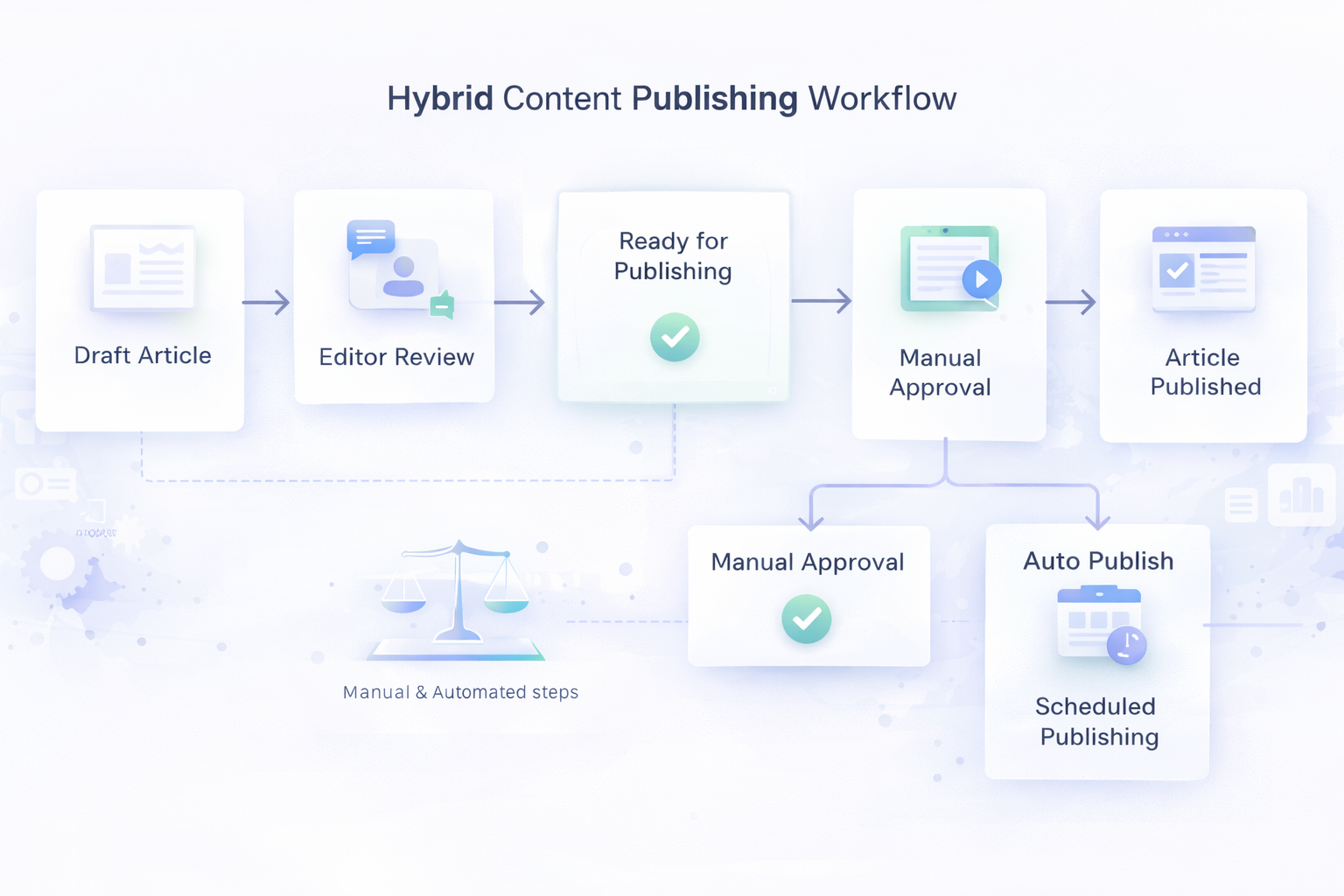
Step 5: Which One Actually Wins for SEO?
If the question is which method wins for SEO in absolute terms, the honest answer is that autopublishing usually wins when content scale and consistency are major growth factors. A site that can publish reliably, expand topic coverage, and keep fresh content moving often has a stronger chance of building momentum over time than a site stuck in manual delays. But that does not mean manual posting loses in every case. For businesses with low publishing volume, high editorial sensitivity, or complex content formatting, manual posting can still be the better fit. SEO performance is not improved by automation alone. It improves when the publishing method supports the broader strategy without creating new quality problems. The most practical answer is this: if manual posting slows down your SEO engine, autopublishing or a hybrid system is likely the better path. If manual posting helps protect article quality without causing delays, it may still be fully reasonable. The winning system is the one that keeps high-quality content moving at the pace your SEO strategy requires. In other words, SEO does not reward manual effort for its own sake. It rewards relevance, structure, consistency, freshness, and useful content. The publishing method should be chosen based on which one helps your business deliver those things more reliably.| Publishing Approach | Main Strength | Main Risk |
|---|---|---|
| AutoPublishing | Consistency, scale, and operational speed | Poor review systems can let weak content go live |
| Manual Posting | Closer control over presentation and final edits | Publishing delays can slow SEO momentum |
| Hybrid Model | Balances automation with human review | Requires a clear workflow to work smoothly |