
Here is a quick checklist you can use right away:
When done correctly, backlink integration is not just about getting more links. It is about making every earned backlink contribute more to your website as a whole. Let’s break down the tactics step by step.
- Create pages worth linking to, not just pages filled with keywords.
- Build content clusters so backlinks support multiple relevant pages.
- Use internal links to distribute authority from linked pages effectively.
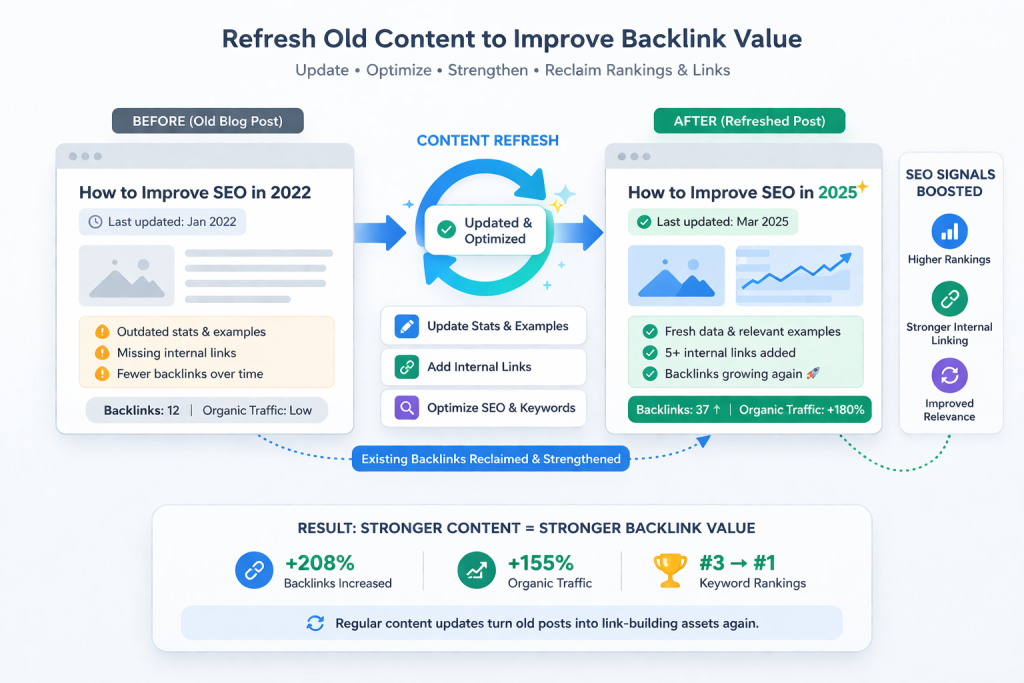
- Refresh older posts so they remain valuable backlink destinations.
Step 1: Build Link-Worthy Pages Before Chasing Backlinks
Before any backlink strategy can work, you need pages that deserve attention. A weak page with thin information will struggle no matter how many outreach emails you send. On the other hand, a strong page with practical insights, original angles, and clear structure has a much better chance of earning links naturally over time. Start by identifying the types of content in your niche that attract citations. These are often detailed guides, industry explainers, original frameworks, data-driven pages, comparison content, checklists, or resource hubs. If your site only publishes generic short-form blog posts, you are making backlink acquisition much harder than it needs to be. For example, a page about “how SEO content automation works” can become more link-worthy if it includes a clear process, common mistakes, use cases, and a breakdown of implementation steps. That is far more useful than a general article repeating the same broad advice found elsewhere. The goal here is simple: give other websites a reason to reference your page. If your article helps explain a concept clearly, supports a claim with useful information, or makes a process easier to understand, it becomes much easier to integrate backlinks into your growth strategy. Tip: Before publishing, ask one question: “Would someone naturally cite this page in their own article?” If the answer is no, improve the content before moving on.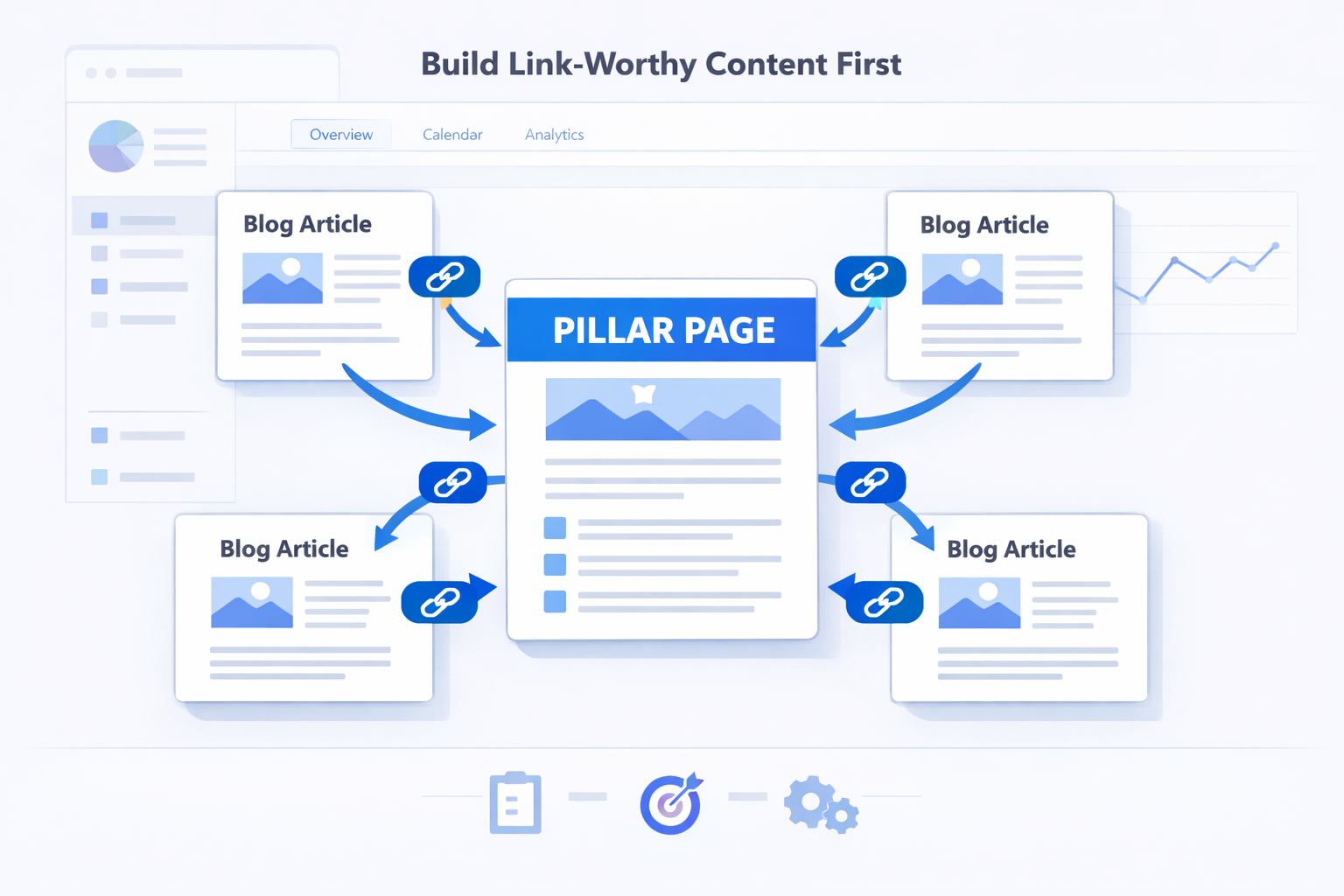
Step 2: Create Topic Clusters That Make Backlinks More Powerful
One of the most overlooked backlink tactics is cluster design. Many websites focus on getting a backlink to a single page, but they forget that rankings often improve faster when that linked page sits inside a well-organized content network. In other words, backlinks work better when the surrounding structure is strong. Start with a main page or pillar page targeting an important topic. Then build several supporting articles around closely related subtopics. These supporting pages should link back to the pillar page and also connect naturally with one another where relevant. This creates a stronger topical signal and helps search engines understand the relationship between your content pieces. Let’s say your core topic is backlink strategy. A solid cluster could include supporting articles on anchor text usage, linkable asset creation, internal authority flow, outreach basics, and common backlink mistakes. If one page in that cluster earns backlinks, the internal structure helps distribute some of that value across the wider topic area. This is one reason content publishing systems matter so much. If your articles are produced randomly without a content map, backlinks have fewer places to flow. But if your website is publishing around clear topic clusters, each backlink can do more work for your SEO. MidstackGrowth helps make this easier by supporting a more consistent publishing process, which is important because backlink integration is strongest when content is planned as part of a broader ranking structure rather than treated as isolated articles.Ask yourself: Are your backlinks helping only one page, or are they strengthening an entire topic cluster?That question alone can shift how you plan future content. The more connected your pages are, the more strategic your backlink profile becomes.
Step 3: Use Internal Linking to Distribute Backlink Value
Backlink integration does not stop once a page receives a link from another website. In many cases, what happens after that is just as important. If a linked page is isolated, some of its potential SEO benefit stays trapped there. But if that page is woven properly into your site structure, the authority has better pathways to move. This is where internal linking becomes essential. Every page that earns backlinks should have a clear connection to relevant commercial pages, supporting blog posts, and topical hubs. That does not mean stuffing links everywhere. It means using contextual internal links that help both users and search engines move naturally through your site. For example, if a guide earns backlinks because it explains a major SEO concept well, that guide should also point readers toward related implementation pages, supporting educational posts, or service-related pages where relevant. This strengthens the user journey while also improving how authority flows through the website. The best internal link paths are built intentionally. You do not want backlinks landing on pages that go nowhere. You want them landing on pages that support broader visibility and help lift the rest of your content ecosystem. Practical rule: Every page that attracts backlinks should link to at least two or three highly relevant pages elsewhere on your site. That way, the SEO value does not sit in isolation.
Key things to review on backlink-earning pages:
When a page receives backlinks and also acts as a strong internal authority hub, its value multiplies. This is one of the simplest but most effective ways to get more out of the backlinks you already have.
- Does the page link to related topic cluster content?
- Does it connect readers to deeper educational resources?
- Does it support important business or conversion pages where appropriate?
- Does the anchor text feel natural and useful?
Step 4: Refresh and Repurpose Older Content for Better Link Integration
Older articles are often an untapped asset in backlink strategy. Many websites publish content, leave it untouched for months, and then wonder why those pages stop attracting attention. But a page that already exists can often become a better backlink destination with updates, better structure, and stronger supporting content around it. Start by reviewing older articles that still cover relevant topics. Are they outdated? Are they too short? Do they lack useful examples, better formatting, or clearer explanations? Even a modest refresh can turn an average article into a much stronger asset for both ranking and link attraction. You can also repurpose existing content into formats that support better backlink integration. A written article might be expanded into a checklist page, a framework-style guide, a comparison article, or a statistics-supported post. Different formats attract attention from different kinds of websites. This is especially useful if certain pages on your website are already getting some authority but are not making the most of it. By improving the content and integrating it more intentionally into your internal structure, you turn old posts into stronger SEO assets instead of letting them decay. Refreshing content also supports consistency. Search engines generally respond better when your website shows signs of ongoing maintenance and relevance. And from a backlink perspective, updated pages are much easier to share, reference, and position as useful resources.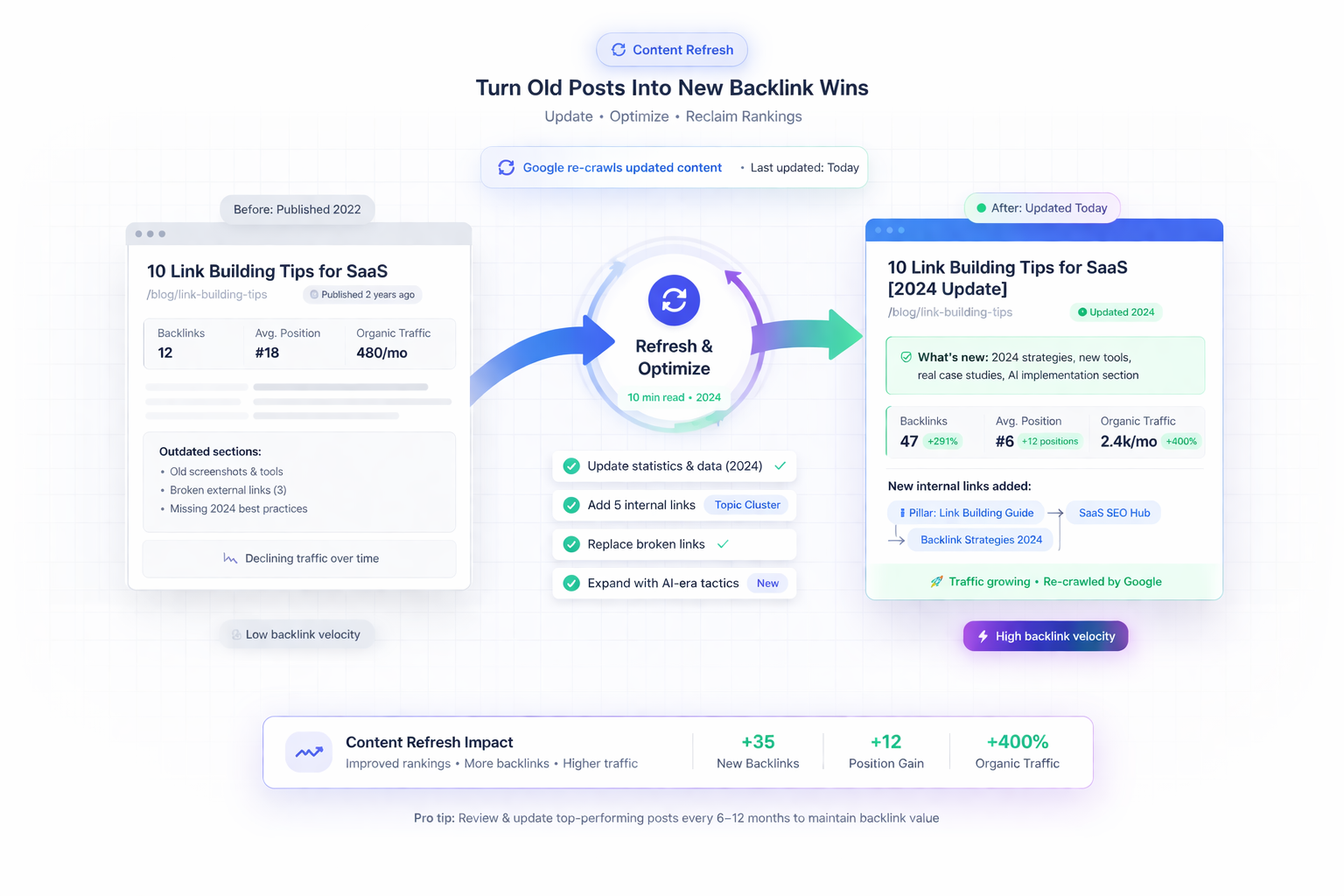
Step 5: Monitor What Is Working and Scale the Right Patterns
No backlink tactic should run on guesswork alone. Once your content, clusters, and internal structure are in place, you need to watch how pages perform and identify the patterns that produce the best results. This is how backlink integration becomes scalable instead of random. Track which pages attract links, which topics gain momentum, and which pieces perform best in search. Then compare those winners. Are they longer? More practical? More specific? Better structured? Do they sit within stronger clusters? These patterns will tell you what kind of pages deserve more attention in your content strategy. Also review whether linked pages are actually helping the rest of your site. If a page attracts backlinks but does not pass value effectively through internal links, you may need to strengthen its connections. If a topic cluster performs better than others, that may be a sign to expand further in that area. The websites that grow steadily in SEO are rarely the ones doing one-off backlink activities. They are the ones that keep refining the relationship between publishing, linking, structure, and authority. That loop matters far more than a single tactic in isolation.| Metric | What to Review | Why It Matters |
|---|---|---|
| Pages with backlinks | Which articles are earning authority | Helps identify successful topics and formats |
| Internal link paths | Where linked pages send users next | Improves authority distribution across the site |
| Organic traffic growth | Whether linked pages are gaining visibility | Shows how backlink integration supports rankings |
| Cluster performance | How related pages improve together | Reveals the strength of your topic structure |